Korean Senior Dance Halls — Where Middle-Aged Koreans Dance by Day
Korean senior dance halls (коллатек) are beloved daytime social spaces for Korea's middle-aged. Explore how these affordable venues blend music, movement, and community.

Korean Senior Dance Halls — Where Middle-Aged Koreans Dance by Day
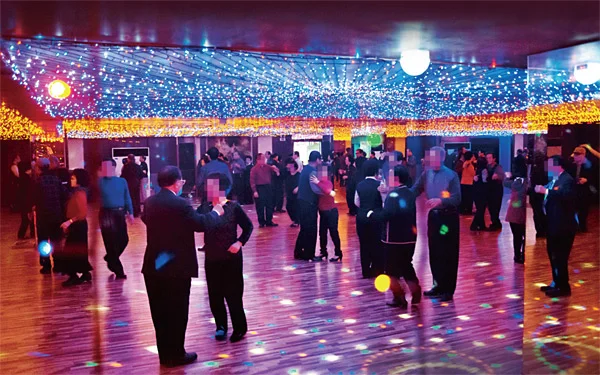
Korean senior dance halls offer a unique glimpse into how Korea's middle-aged and elderly find leisure and community during daylight hours. Unlike nightclubs that pulse after dark, these dance halls open at 2 PM and run until dusk. For a few thousand won, guests get a soft drink and hours of dancing to trot and classic hits—a scene that still thrives in Korean cities among the 50-plus crowd.
What exactly are Korean senior dance halls?
The Korean term kollatek (콜라텍) blends "cola" with "discotheque." Born in mid-1990s Korea, the name signals exactly what you'll find: daytime dance venues serving soft drinks instead of alcohol. The core demographic is 50 and up—retirees with newfound free time, people craving social connection without the pressure of drinking culture.
Entry runs between ₩5,000 and ₩10,000 (roughly $4–8 USD). That buys you a drink or two and unlimited time to dance, rest, repeat. Most venues occupy basements or second floors, outfitted with a spacious dance floor, a small stage, basic sound systems, and dim lighting punctuated by a slowly rotating mirror ball scattering shards of light.
The history behind the dance halls
Korean senior dance halls evolved from the discotheques that swept Korea in the 1970s and 80s. As that disco-loving generation aged into middle age, the format transformed. The mid-1990s—bracketing the 1997 IMF financial crisis—saw waves of early retirements. Suddenly, affordable, respectable leisure spaces were in demand.
The no-alcohol policy was critical. It kept these venues outside the regulatory net for nightlife establishments, avoided family scrutiny, and earned a "wholesome socializing" stamp of approval. By the early-to-mid 2000s, dance halls had spread nationwide—big cities and small towns alike sprouted one or two.
Frequently Asked Questions
- Where can I find Korean senior dance halls?
- In Seoul, look in Jongno, Euljiro, and Nowon—neighborhoods with large middle-aged populations. They're also scattered in older districts of Busan, Daegu, and Gwangju, and some smaller cities. Most occupy basements or second floors and advertise with signs reading "dance hall" or "healthy music venue" in Korean.
- How much does entry to a Korean senior dance hall cost?
- Typically ₩5,000 to ₩10,000 (about $4–8 USD). Entry includes one or two soft drinks and unlimited time inside. If a special guest performer appears, there may be a small surcharge, but it's generally very affordable.
- Can young people visit Korean senior dance halls?
- Physically, yes—but expect to feel out of place. The crowd skews 60s and 70s, so younger visitors are rare and usually driven by curiosity. Some halls now host retro events to attract younger guests, but daily foot traffic remains overwhelmingly older adults.
- What's the difference between a Korean senior dance hall and a nightclub?
- Senior dance halls operate during the day (2 PM to early evening), serve no alcohol, and cater to guests 50 and up. Nightclubs run at night, serve drinks, and draw younger crowds. Music differs too: dance halls play trot and oldies; clubs spin EDM, hip-hop, and contemporary genres.