Korean Sunscreen: 5 Best Picks for Summer & Your Complete Skin-Type Guide
Korean sunscreen delivers zero white cast and feather-light texture. From oily to sensitive skin and makeup primers, find your perfect summer SPF match here.
Korean sunscreen has conquered the global beauty market with weightless textures that vanish into skin and cutting-edge UV filter technology. Recent reports show Seoul-born SPF formulas topping bestseller charts in the US and Europe, praised for their skin-type-specific formulations and dual-duty performance as makeup primers. These multitasking marvels eliminate white cast while delivering skincare benefits that Western sunscreens rarely match.
Western brands draw a hard line between chemical and mineral filters, but Korean sunscreen innovates with hybrid formulas that marry the best of both worlds. Chemical filters absorb UV rays and convert them to heat, while mineral filters (zinc oxide and titanium dioxide) reflect light away from skin. Korean beauty labs cracked the code with nano-particle technology that eliminates the chalky finish of physical blockers while keeping irritation minimal for sensitive complexions.
The real game-changer? Skincare ingredient layering. These aren't just sun shields — they're serums in disguise. High concentrations of hyaluronic acid, centella, and niacinamide mean your SPF pulls double duty, delivering hydration and soothing benefits that let you skip steps in your routine.
Does Korean sunscreen really eliminate white cast completely?
Nano-particle technology shrinks mineral filter particles (zinc oxide and titanium dioxide) to near-invisible sizes, virtually eliminating white cast. Chemical-mineral hybrid formulas blend transparently, while pure mineral options use color-correcting tints (green or purple) that adapt to your skin tone seamlessly.
Is there a real difference between SPF 50 and SPF 30 protection?
SPF 30 blocks about 97% of UVB rays, while SPF 50 blocks 98%. The numerical gap is small, but for extended outdoor time or high-altitude locations, SPF 50+ PA++++ is the safer bet. For commuting and indoor work, SPF 30 PA+++ suffices — but reapplying every 2–3 hours matters more than the number.
Can I reapply sunscreen over makeup?
Stick, cushion, and powder sunscreens work over makeup. Tap stick formulas onto cheekbones and forehead, press cushion formats with a puff for layering without disturbing your base. Liquid sunscreens are pre-makeup only; for touch-ups, reach for spray or powder versions that won't smudge foundation.
Are chemical filters safe for sensitive skin?
Modern chemical filters (Uvinul A Plus, BEMT) offer better photostability and lower irritation than first-generation options (oxybenzone). That said, sensitive or rosacea-prone skin often fares better with pure mineral filters (zinc oxide). Patch-test for 24 hours, and choose fragrance-free, alcohol-free formulas to minimize reactions.
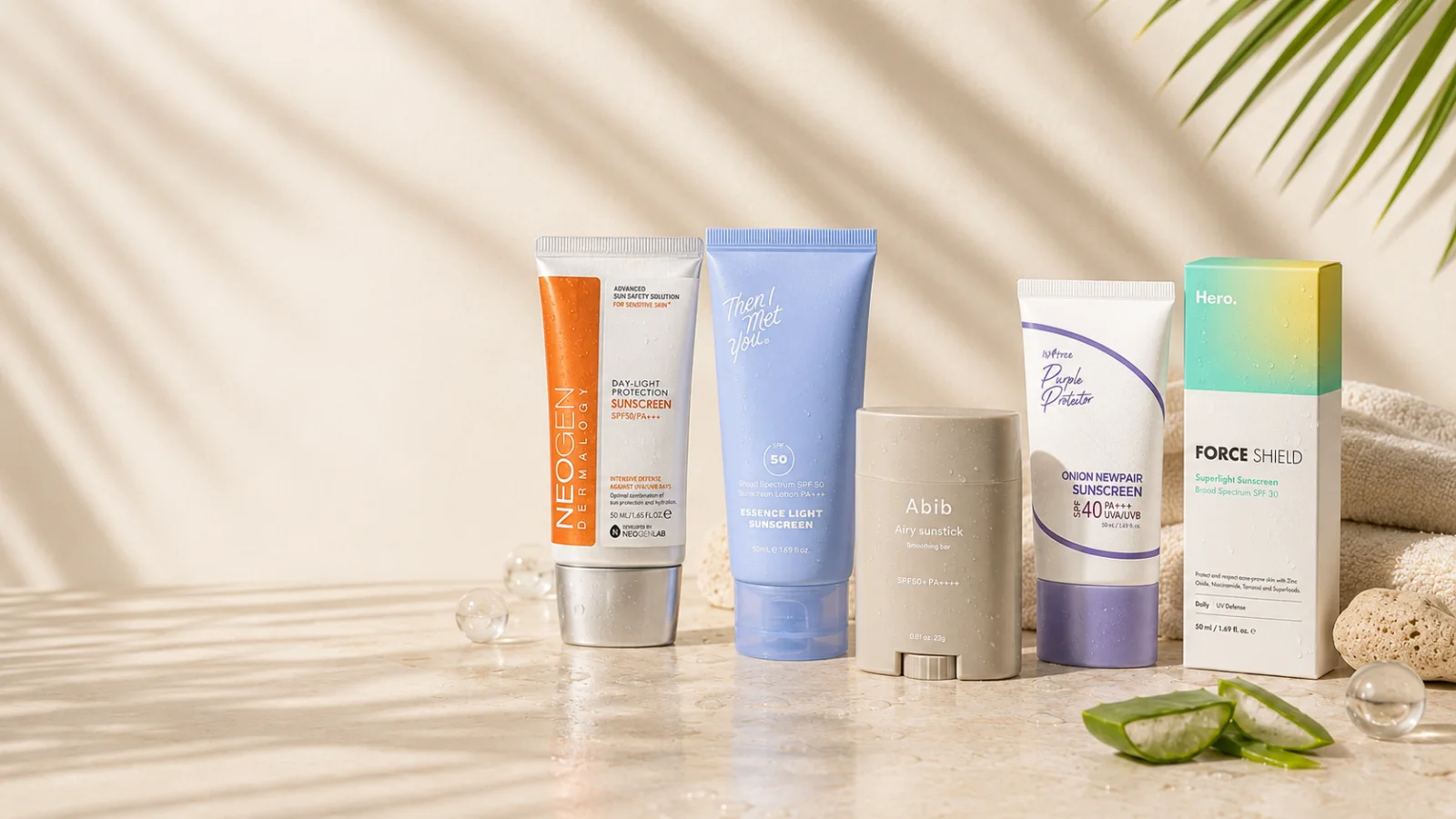
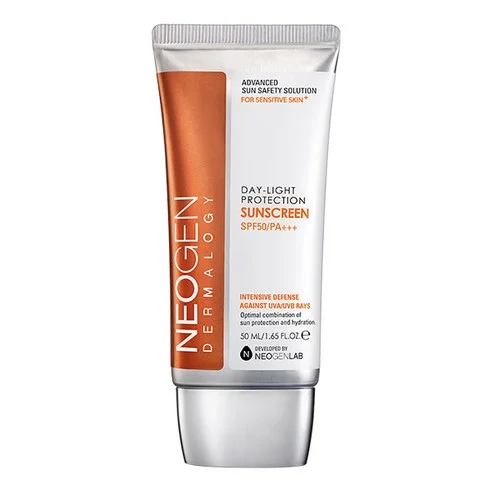
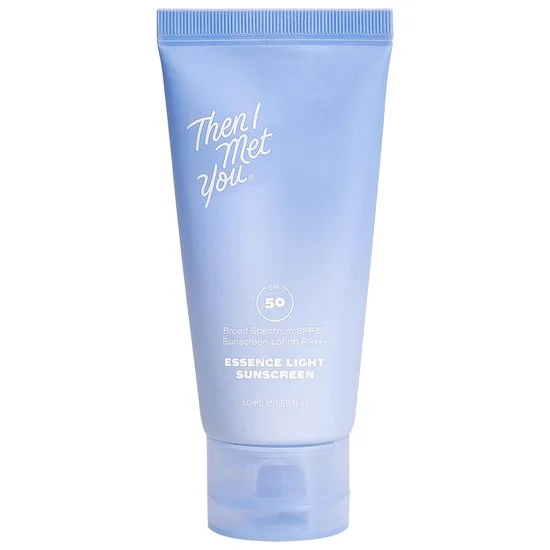
Oily skin types dread sunscreen for three reasons: sticky residue, midday shine, and clogged pores. Neogen's Airy line eliminates all three with a silicone-minimized base and lightweight emulsion structure that sinks in without a trace of grease. Sebum-controlling ingredients — silica and kaolin powder — absorb excess oil while maintaining hydration through a clever two-way mechanism.
One beauty editor called this product "the gateway drug for Korean sunscreen newbies," praising its effortless blending and perfect hydration balance. The SPF 50+ PA++++ rating provides serious protection for summer outdoor activities without the heavy feel.
Want to skip the primer step in your summer skincare routine? This is your answer. The essence-like texture smooths skin texture while leaving a dewy, glossy finish that helps foundation glide on and lock in place without pilling. Vegan and cruelty-free certifications appeal to ethically-minded consumers who won't compromise on performance.
One customer review highlighted the biggest win: "My hair doesn't stick to my face, and there's zero grease." A little goes a long way, covering your entire face and making the price per wear impressively low.
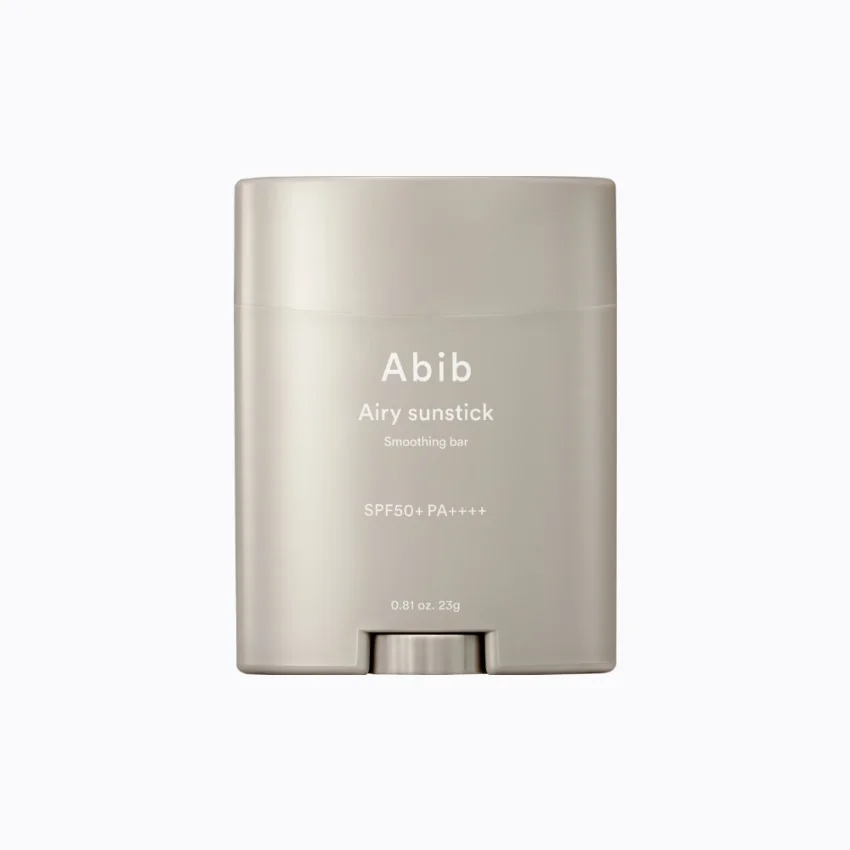
Stick sunscreens went viral in the Korean beauty market for one killer reason: mess-free reapplication on the go. The Airy Sun Stick ditches waxy bases in favor of a gel-to-powder structure that delivers a matte finish without creating a suffocating film on skin.
Water-resistant for 80 minutes, it handles swimming and surfing with ease, and the TSA-compliant size means you can toss it in your carry-on. One user called it "the only sunscreen that doesn't break me out," crediting the non-comedogenic formula that won't clog pores.
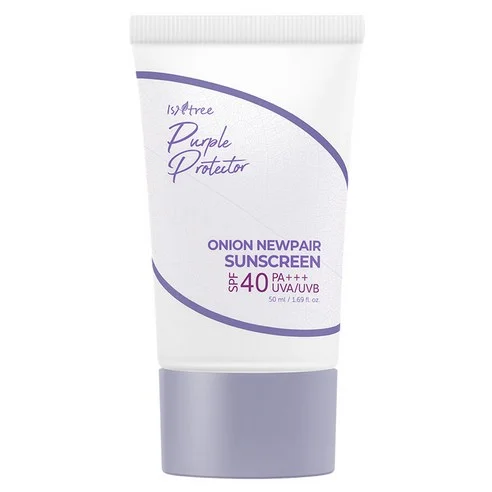
Onion extract is Korean skincare's rising star ingredient. Rich in quercetin and sulfur compounds, it delivers antioxidant and anti-inflammatory benefits while visibly reducing redness. This formula doubles as a purple-toned color-correcting base that neutralizes yellow undertones in skin.
One merchandising manager noted, "The hydration is so good you can skip moisturizer," recommending it for combination skin. The SPF 40 PA+++ rating handles daily UV exposure, though you'll want to reapply every 2–3 hours during prolonged direct sun.
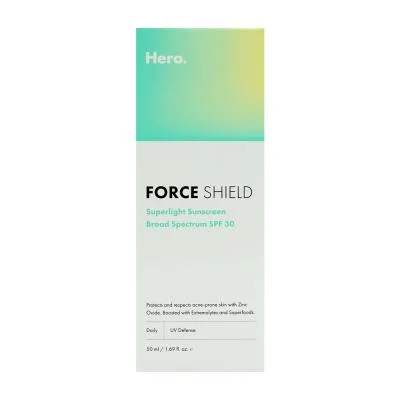
This mineral-filter-based lightweight gel uses a green tint to optically neutralize redness. With 17% zinc oxide, it creates a physical barrier without irritating sensitive skin, and the non-nano particles earned it reef-safe certification.
One reviewer described it as "skin that can breathe," praising the breathable texture. It won't clog pores, making it safe for acne-prone complexions, and the green tone works beautifully as a redness-correcting step before makeup.
Japanese sunscreens (Anessa, Bioré UV) prioritize extreme waterproofing and all-day wear. Korean sunscreen pursues the sweet spot between comfortable daily wear and skincare benefits. J-beauty formulas often require dedicated removers at cleansing time due to their tenacious grip, while K-beauty balances staying power with easy removal using regular cleansers.
Korean brands also elevate packaging design with minimalist aesthetics and sophisticated typography that photograph beautifully for Instagram. The strategy extends product experience into lifestyle territory, making sun protection feel aspirational rather than clinical.
UV filters degrade over time. Chemical filters break down at the molecular level as they absorb rays, while mineral filters mix with sweat and sebum, weakening coverage. Dermatologists recommend that even office workers sitting near windows or stepping out for lunch reapply around 1–2 PM.
Stick, cushion, and spray sunscreens let you reapply over makeup, making them perfect for office environments. Powder formulas offer a two-in-one effect, mattifying oil while reinforcing UV protection.
Oxybenzone and octinoxate are banned in Hawaii and Palau due to coral reef damage. Instead, photostable filters like avobenzone and Uvinul A Plus have emerged as alternatives. Korean brands already reformulated around these concerns, incorporating next-generation filters like bis-ethylhexyloxyphenol methoxyphenyl triazine (BEMT).
For hydration and soothing, look for centella asiatica, panthenol, and allantoin. Anti-aging lines add niacinamide and adenosine to the mix. If you have sensitive skin, verify alcohol-free, paraben-free, and fragrance-free status before purchasing.
Korean sunscreen is no longer limited to duty-free shops or Olive Young — it's now stocked at Amazon, Sephora, and Cult Beauty. When ordering internationally, verify expiration dates (3 years from manufacture, 12 months after opening) and customs regulations (like FDA registration for US imports). Platforms like delicaglobal specialize in Korean beauty with authenticity guarantees and fast shipping.
Your ideal formula depends on skin type, lifestyle, and whether you wear makeup. Oily skin needs sebum control, sensitive skin thrives with mineral filters and soothing extracts, and active outdoor enthusiasts require waterproof stick formats. The beauty of Korean sunscreen lies in the sheer variety already on shelves, with targeted solutions for every need. A sun-care partner you can trust under summer rays — that's the real value proposition of Korean SPF.