
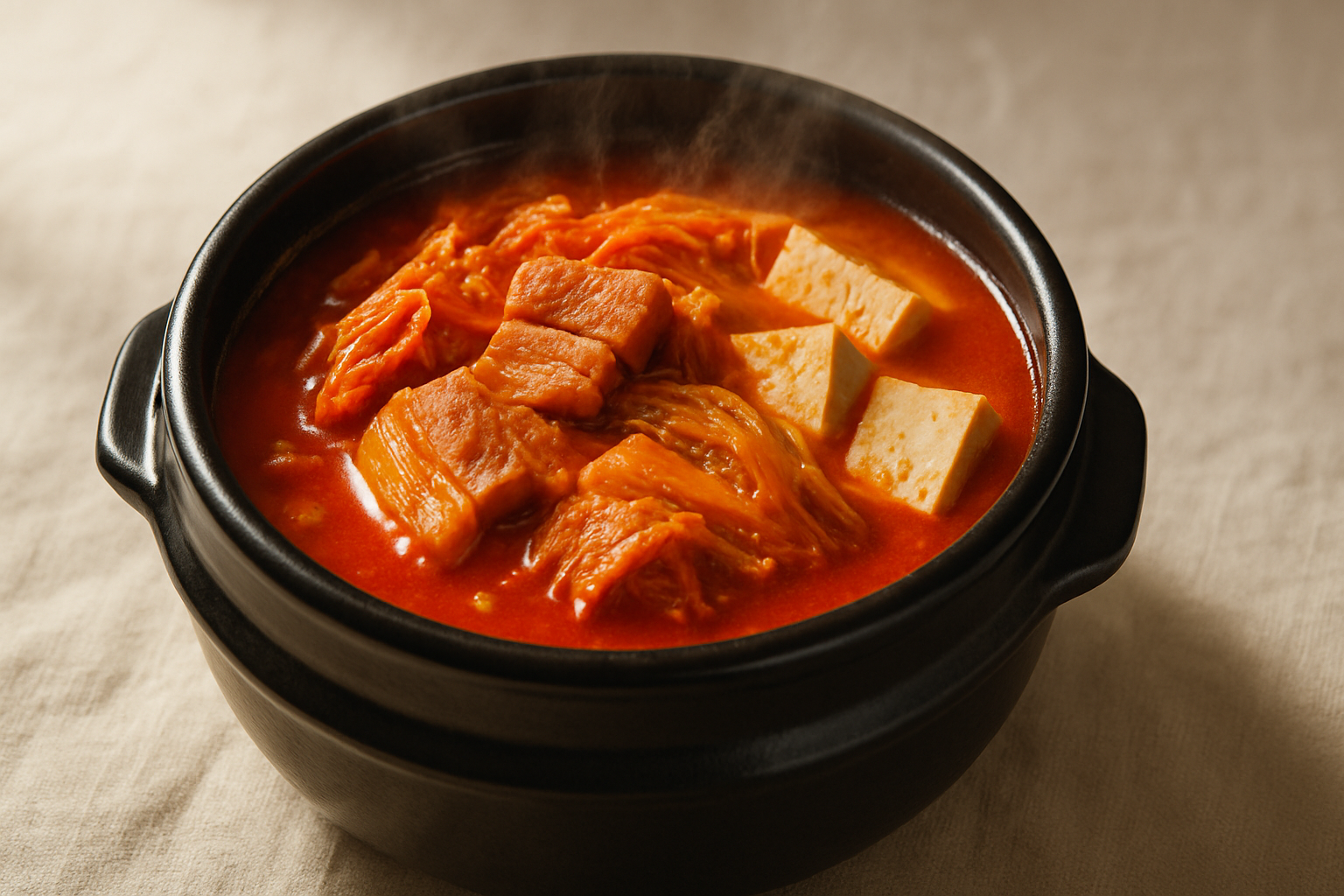
How to Make Pork Kimchi Jjigae – The Ultimate Recipe for Deep, Rich Korean Stew
Learn to make restaurant-quality pork kimchi jjigae at home with aged kimchi and pork belly. This authentic Korean stew recipe delivers bold, tangy flavor in one pot.

Why This Pork Kimchi Jjigae Recipe Hits Different
There's something magical about the way aged kimchi's tang melts into rich pork fat to create kimchi jjigae—Korea's ultimate comfort food. This is the kind of stew that makes a bowl of rice disappear before you know it. It's soul-warming, boldly flavored, and honestly? It's the dish every Korean reaches for on a cold day or after a long week.
This recipe breaks down every step—from prepping your ingredients to controlling the heat—so you can nail restaurant-quality kimchi jjigae in your own kitchen, even if it's your first time.
Ingredients You'll Need (Serves 2)
Main Ingredients
- 200g aged kimchi (or well-fermented sour kimchi)
- 150g pork belly, sliced (pork shoulder works too)
- 1/2 block firm tofu
- 1/2 stalk green onion
- 1 cheongyang chili pepper (optional, for heat)
Broth & Seasoning
- 2 cups water or rice water (400ml)
- 1 tablespoon Korean red pepper flakes (gochugaru)
- 1 tablespoon soup soy sauce (guk-ganjang)
- 1 tablespoon minced garlic
- 1 teaspoon salted shrimp (saeujeot) or fish sauce
- 1/2 teaspoon sugar
Step-by-Step: How to Make Kimchi Jjigae
Step 1: Prep Your Ingredients
Chop your aged kimchi into bite-sized pieces—about 3–4cm wide so it's easy to eat. Cut the pork into similar-sized chunks. Slice the tofu into 1.5cm-thick rectangles, and cut the green onion on a diagonal. If you're using the chili pepper, slice it into thin rounds.
Step 2: Sauté the Kimchi
Here's the secret: start by cooking the pork belly in your pot (a ttukbaegi earthenware pot is traditional, but any heavy-bottomed pot works) over medium heat with no added oil. As the pork renders its fat, toss in the chopped kimchi and stir-fry together for 2–3 minutes. You'll know it's ready when the kimchi turns translucent and soaks up all that porky goodness.
Step 3: Add Broth and Seasonings
Pour in your water (or rice water for extra body), then stir in the red pepper flakes, minced garlic, soy sauce, and sugar. Crank the heat to high until it comes to a rolling boil, then reduce to medium and let it simmer for 10–15 minutes. This is when the kimchi softens and releases all its funky, tangy flavor into the broth.
Step 4: Finish with Tofu
Once the broth has reduced and thickened slightly, nestle in your tofu slices and simmer for another 5 minutes. Taste and adjust the seasoning with salted shrimp or fish sauce. Scatter the green onion and chili pepper on top, bring it back to a gentle boil, and you're done. Pro move: drizzle a few drops of sesame oil right before you turn off the heat for an extra layer of nutty richness.
Pro Tips for the Best Kimchi Jjigae
Aged Kimchi vs. Fresh: Aged kimchi (mukeunji) is ideal because of its deep, sour punch. If yours isn't sour enough, add 1 teaspoon of vinegar to mimic that fermented tang.
Choosing Your Pork Cut: Pork belly is classic and gives you that luscious fat, but pork shoulder is leaner and just as delicious. Pork neck (moksal) is another great option if you want something in between.
Rice Water Magic: Using the milky water from rinsing rice adds a subtle nutty depth and makes the broth slightly thicker. It's a small upgrade that makes a noticeable difference.
Seasoning to Taste: Kimchi varies wildly in saltiness, so always taste before adding more saeujeot or fish sauce. If you prefer a milder flavor, finish with a pinch of salt instead.
What to Serve with Kimchi Jjigae
A steaming bowl of white rice is non-negotiable. For next-level indulgence, top your stew with a fried egg—the runny yolk mixing into the broth is chef's kiss. Round out the meal with classic Korean banchan like roasted seaweed (gim), diced radish kimchi (kkakdugi), or cucumber salad. And if you're really hungry? Toss in some instant ramen noodles (ramyeon saری) for a carb-loaded feast.
Storage and Reheating Tips
Kimchi jjigae keeps well in an airtight container in the fridge for 2–3 days. When reheating, add a splash of water and bring it back to a simmer—the flavors actually deepen overnight, so day-two jjigae often tastes even better. Some would argue it's the best version.
Frequently Asked Questions
- Can I make kimchi jjigae without pork?
- Absolutely. Swap the pork for canned tuna or just load up on tofu for a lighter, vegetarian-friendly version. Tuna kimchi jjigae is less rich and works great if you're watching calories. A drizzle of perilla oil or sesame oil adds back some of that savory depth.
- What if my aged kimchi is too sour?
- Rinse the kimchi briefly under cold water to mellow the acidity, or add an extra 1/2 to 1 teaspoon of sugar to balance it out. Slicing in half an onion also adds natural sweetness and rounds out the sharpness beautifully.
- How do I make my kimchi jjigae spicier?
- Bump up the gochugaru (red pepper flakes) or throw in 2–3 more cheongyang peppers. Adding 1/2 tablespoon of gochujang (Korean red pepper paste) will bring both heat and body to the broth, though it will darken the color—adjust to your preference.
- Do I really need a ttukbaegi pot to make kimchi jjigae?
- Not at all. A ttukbaegi holds heat beautifully and keeps your stew piping hot at the table, but the flavor is just as good in a regular pot. Stainless steel, cast iron, or enamel pots all work perfectly fine.